Therapy is a sacred place where we are fully seen, heard, and felt. This is the place where we not only get known, but we get to know ourselves in another’s presence.
My role is to meet you where you are, without judgment, without criticism, and with curiosity and compassion.
Sometimes we cry.
Sometimes we laugh, because laughter is what connects us to our most alive self.
Sometimes we talk.
And sometimes we quietly sit together as we allow what is rising to emerge and to be held.
What therapy is, to me…

So… where do we start?
I start most sessions with this phrase because in our work together, you are honored, the deepest parts of you are held, and you are heard.
I also like to ask, “How might you imagine this could be,” because we go deeper than simply talking about feelings and thoughts. We bridge the imaginative and the real, allowing both the conscious and the unconscious to guide us to what is deeply true for you.
I do this because
I burned out at 42.
Thirteen years into my career, I had built a CARF-accredited behavioral health agency, was a foster parent, a community leader, and the person everyone called when something needed to get done.
And every night I woke up at 3am in complete panic.
I tried to solve it the way competent and capable women solve everything.
It didn't work.
So I walked away from the agency, the roles, the responsibilities. I thought once I did, I'd feel better.
I didn't. The burnout remained.
Desperation is a useful teacher and what I learned in that process — about the nervous system, about perimenopause, about what actually drives burnout and anxiety in midlife women — became the foundation of the work I do now.
How I work:
Maslow said that if all you have is a hammer, everything looks like a nail.
Most approaches to anxiety, burnout, and midlife overwhelm hand you one tool, such as: reframe your thoughts; regulate your nervous system; process the trauma.
These are not wrong — they are incomplete. Insight only takes us so far. Somatic work only takes us so far. What actually moves the needle is having the right tool at the right moment — and knowing how to use it.
I have spent 25 years building that toolbox.
I am a somatic therapist and I practice Somatic Depth Psychotherapy — working at the intersection of the nervous system, the body, and the psyche. Using EMDR, Havening Techniques®, Jungian and Humanistic depth psychology, and expressive approaches, I meet the problem where it actually lives — not just the story being told.
And I don't just bring my toolbox into the room; I help you build your own. Because the goal is always for you to leave with more than you came in with — the self-knowledge, the somatic awareness, the tools to navigate what comes next on your own terms.
I use paradox, humor, directness, and deep compassion because those are the things that create real human connection. And human to human connection is where change happens.
I am not an impersonal or a blank-screen therapist. I am a humanistically and depth-oriented therapist, a feminist, an LGBTQ+ ally, and non-religious. As part of my core values as a therapist, and as a person, I strongly believe in the innate worthiness of each person. You can read more about my values here.
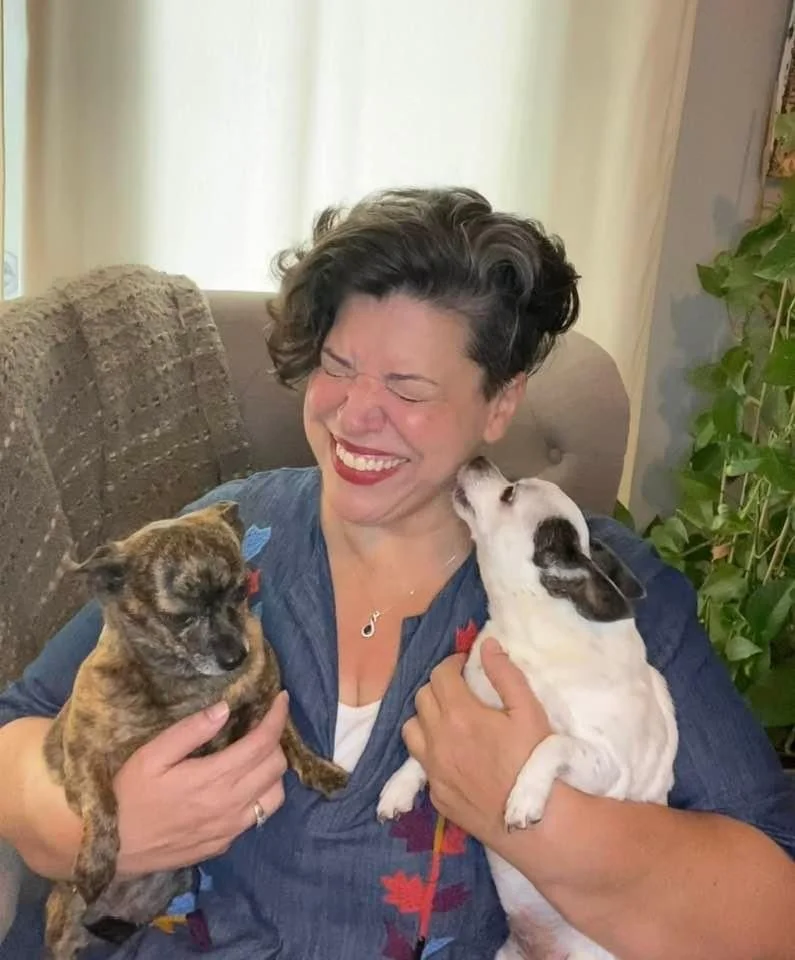
Credentials, briefly.
MA, Humanistic and Transpersonal Psychology ·LPC, Georgia #LPC004510 · EMDR Certified · Certified Clinical Trauma Professional · Certified Havening Techniques® Practitioner· Post-Graduate Certifications in applied Somatic Jungian Psychology, Play Therapy, and Addiction · Certified Yoga Teacher · HeartMath Certified Provider · 25 years clinical practice · 2,300+ women in midlife · Former CEO, CARF-accredited behavioral health organization.
For a deeper exploration of my approach, read my published essay in the Journal of Jungian Scholarly Studies: When the Body Speaks What Words Cannot